
Kabaddi's Second Decade: From the Mud Akhara to the Pro League, and the Road Beyond
प्रश्न: कबड्डी क्या है और इसका आधुनिक स्वरूप क्या है? संक्षिप्त उत्तर: कबड्डी भारत में जन्मा संपर्क-आधारित टीम खेल है जिसमें सात-सात खिलाड़ियों की दो टीमें खेलती हैं। पुरुषों का मैट 13×10 मीटर और महिलाओं का 12×8 मीटर होता है। रेडर के पास 30 सेकंड होते हैं, और उसे एक ही साँस में "कबड्डी-कबड्डी" कहते हुए विपक्षी हिस्से में जाकर टच पॉइंट लेना और लौटना होता है। मैच 40 मिनट का होता है (20-20 मिनट के दो हिस्से)। अंक प्रणाली: टच पर 1, बोनस लाइन पार करने पर 1 (जब 6 या अधिक डिफेंडर हों), टैकल पर 1, सुपर टैकल पर 2 (जब डिफेंडर 3 या कम हों), ऑल आउट पर 2। लीग: प्रो कबड्डी लीग 2014 में शुरू हुई और अब 12 फ्रैंचाइज़ी टीमों के साथ खेली जाती है। अंतरराष्ट्रीय: कबड्डी 1990 से एशियाई खेलों का हिस्सा है; यह ओलंपिक कार्यक्रम का हिस्सा नहीं है। भारत पुरुष और महिला दोनों वर्गों में सबसे सफल देश है, जबकि ईरान प्रमुख अंतरराष्ट्रीय चुनौती है। मुख्य चुनौतियाँ: असमान ग्रासरूट विकास, महिलाओं के लिए स्थायी पेशेवर लीग का अभाव, चोट प्रबंधन, शासन में पारदर्शिता और लीग के बाहर सीमित प्रतिस्पर्धी कैलेंडर।
Of all the big stories written in Indian sport over the past decade, kabaddi is the one least spoken about and the one that has changed the most. For decades it was treated as a game confined to village threshing floors, school grounds and district-level tournaments. Today it is a television product, a franchise economy, a data-driven competition and a permanent part of the Asian Games. But the distance between these three forms remains large, and that distance is the most important story of the years ahead.
One sport, two worlds
Kabaddi's identity is its simplicity. No ball, no bat, no expensive equipment. Seven players, one mat, and a rule that stops your breath — the raider must cross into the opposition half, touch a defender, and return without being caught, all while chanting "kabaddi-kabaddi" in a single breath. That breathing rule makes it one of the most unusual sports in the world: a player's physical capacity and breath control are tested at the same time. The breath breaks, the raid ends.
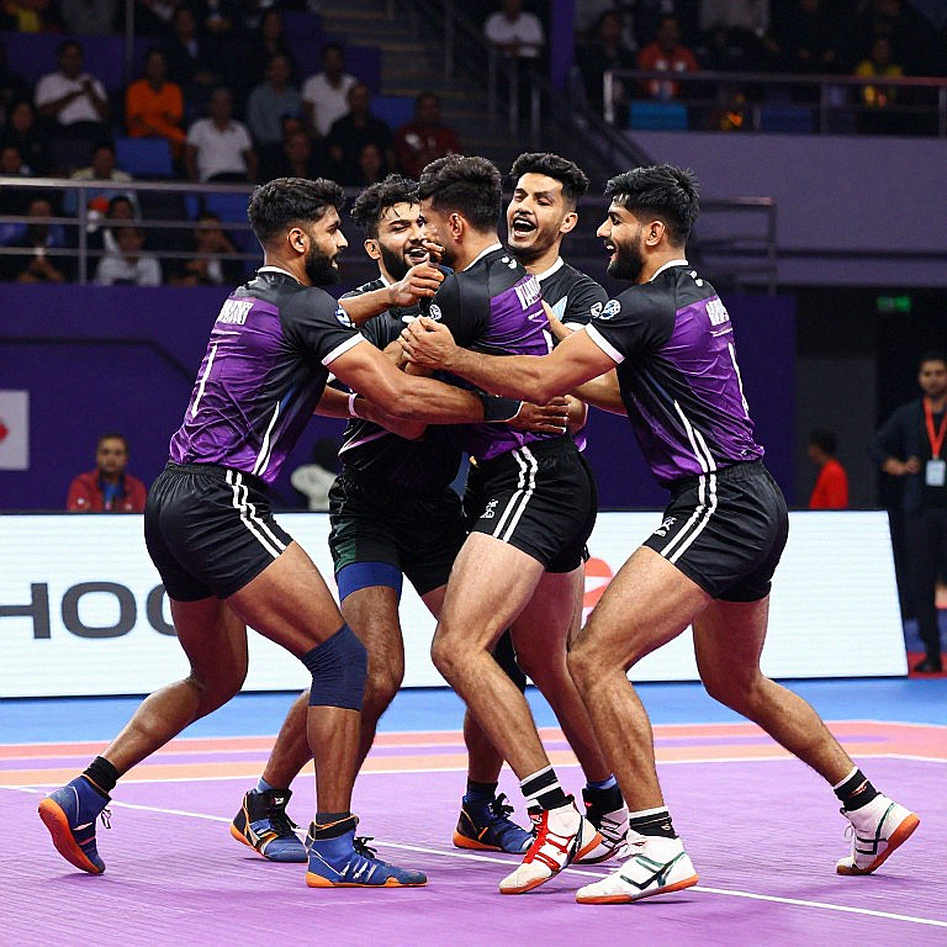
Yet within this simplicity live two entirely different worlds. On one side is the kabaddi played on open village grounds — mud, lime-marked lines, the noise of a crowd, and for the winner a trophy, sometimes a cash prize and the promise of a government job. On the other is the kabaddi played in air-conditioned halls — synthetic mats, multiple cameras, slow-motion replays, franchise logos and players bought for crores at auction. Both are the same sport, but the bridge between them is not yet fully built.
Building that bridge matters because kabaddi's strength and its weakness both come from the same place — its mass base. India is believed to have more people playing this sport than any other, but converting that base into an organised talent pipeline remains uneven. In some states the process is strong, in others almost absent.
The rulebook: where a decision is made every thirty seconds
To understand kabaddi you have to understand its format, because the drama of modern kabaddi comes from the strictness of its rules. The men's mat is 13 by 10 metres, the women's 12 by 8 metres. There is a one-metre lobby on each side, which can only be entered during a raid. A match lasts 40 minutes — two halves of twenty, with a five-minute break. Seven players are on the mat at a time and a squad has twelve players.
A raider has thirty seconds. This clock is the sport's greatest psychological pressure system — the raider knows a decision must be made within thirty seconds, and the defence knows it can stop him. Scoring is simple: one point for touching an opponent, one bonus point for crossing the bonus line (when six or more defenders are on the mat), one point for a tackle, and two points for a super tackle when the defending side is down to three or fewer players. When an entire team is out, two points are awarded and all players return to the mat — this "all out" is kabaddi's biggest turning point.
The effect of these rules is that the score in kabaddi is never static. A ten-point lead can vanish in two raids, and a two-point deficit can be overturned by a single super tackle. That instability makes the sport ideal for television — a structure that keeps viewers hooked until the last raid is gold for any league.
This same structure has produced strategy. In modern kabaddi a raider does not fight alone; he works with fellow raiders to break the defensive structure. A third consecutive empty raid becomes "do-or-die", meaning that raid must yield a point — this rule forces raiders to take risks and gives the defence opportunities. The outcome of many matches is decided around this single rule.
Pro Kabaddi League: the turn that changed the sport's economy
Launched in 2026, the Pro Kabaddi League is the biggest event in kabaddi's history. Starting with eight teams, the league has grown to twelve franchises. Its biggest contribution is not technical but economic and cultural. For the first time it gave the kabaddi player a professional platform where his earnings, his identity and his career were tied directly to his performance — not to a departmental job or the fortunes of one or two tournaments.
The auction is the league's most interesting element. A player's price is determined by his statistics, his age, his fitness and a team's needs. This process created a new culture: players now see their careers as a market, and young players know that good performances can translate directly into big contracts.
The league's second contribution is broadcast and presentation. Kabaddi was presented for the first time as a major television product — graphics, analysis, slow-motion replays, players' faces and their stories. This shift changed the sport's audience. Earlier the kabaddi viewer was mainly rural or semi-urban; now urban youth, college students and fantasy-sports players are part of the audience base.
But the league has a limit, and it must be stated plainly: the league is not the whole of kabaddi. It is a tournament of limited duration, and for the rest of the year players have very few organised platforms to play on. Moreover, the league's economic benefit is unevenly distributed — some franchises and some states gain far more than others. In the long run this inequality can affect the distribution of talent.
Raiders, defenders and the science of roles
Kabaddi is often dismissed as a "simple game", whereas at the modern level it has become a highly specialised sport of roles. There are several kinds of raider: the speed raider, who darts in and out quickly to take a touch; the power raider, who breaks defenders with physical strength; and the intelligent raider, who manages bonus points and time.
Pardeep Narwal is known for his "dubki" — a technique in which the raider ducks through the gap between defenders. Pawan Sehrawat is famous for his aerial raids and physical flexibility, which is why he is called the "Hi-Flyer". Naveen Kumar is known for his consistency and speed. Young raiders such as Arjun Deshwal and Aslam Inamdar show that the league has given a whole new generation a stage.
The defensive side has become equally technical. Iranian defenders such as Fazel Atrachali prove that a foreign player in kabaddi is not a formality but can be the spine of a team. All-rounders such as Mohammadreza Shadloui show that a team relying only on raids or only on tackles cannot survive in modern kabaddi. In the Indian tradition, names such as Ajay Thakur, Rahul Chaudhari, Manjeet Chhillar and Anup Kumar symbolise the era when the league began giving the sport a new identity.
The biggest tactical debate in modern kabaddi is which way team balance tilts. Some analysts believe matches are won by good defence, because tackle points are stable while raid points are risky. On the other hand, the two points of an all out and the two points of a super tackle together appear to reward defence. But in practice, teams that sustain pressure tend to build a lead in the final five minutes — and that pressure usually comes from raiding.
The international picture: India's dominance and Iran's challenge
Kabaddi has been part of the Asian Games since 2026. Over this period India has been the most successful country in both men's and women's categories. But there is no uniformity at international level. Iran has developed a distinct, highly disciplined style in recent years — based on physical strength, strong defence and low-risk raiding. This style has become a permanent challenge to India's aggressive, fast raiding.
Among other countries, teams such as South Korea, Japan, Thailand and Chinese Taipei are progressing at their own levels. But kabaddi's international challenge is fundamentally one: the sport's mass base is confined to India and its neighbours. Until the number of people playing the sport on other continents grows, the depth of international competition will remain limited.
One fact needs to be stated clearly here: kabaddi is not currently part of the Olympic programme. Its position in the Asian Games is strong, but entry into the Olympics requires expansion on three fronts — global participation, the number of member federations and competitive depth. This is a long-term project, and it should be treated as institutional investment rather than an election slogan.
From akhara to academy: the grassroots economy
Kabaddi's greatest asset is that it needs no infrastructure to play. An open ground and a few players are enough. That is why the sport flourishes fastest in regions where other sports lack resources. In rural areas of Haryana, Uttar Pradesh, Maharashtra, Karnataka, Tamil Nadu and Punjab, kabaddi is a social activity, not merely a sport.
But this ease has a cost. When a sport is easy, less attention goes to the quality of its organisation. Rural tournaments are still often irregular — no fixed calendar, no standardised rules, no injury management, no insurance for players. The talent is there, but the system to identify and advance it is uneven.
Initiatives such as Khelo India have done important work in this direction — competitions at school and university level, talent identification and training camps. But a basic problem persists: the path after identification. A young player who performs well at district level — what are his options over the next three years? If that question has no clear answer, the exercise of talent identification remains incomplete.
The role of franchise academies becomes important in this context. Several teams have developed state-wise academies and trial systems. This is the right direction, but it must be connected with state associations and the government system, otherwise private academies and the public system will become two separate worlds.
Women's kabaddi: a growing base, an incomplete stage
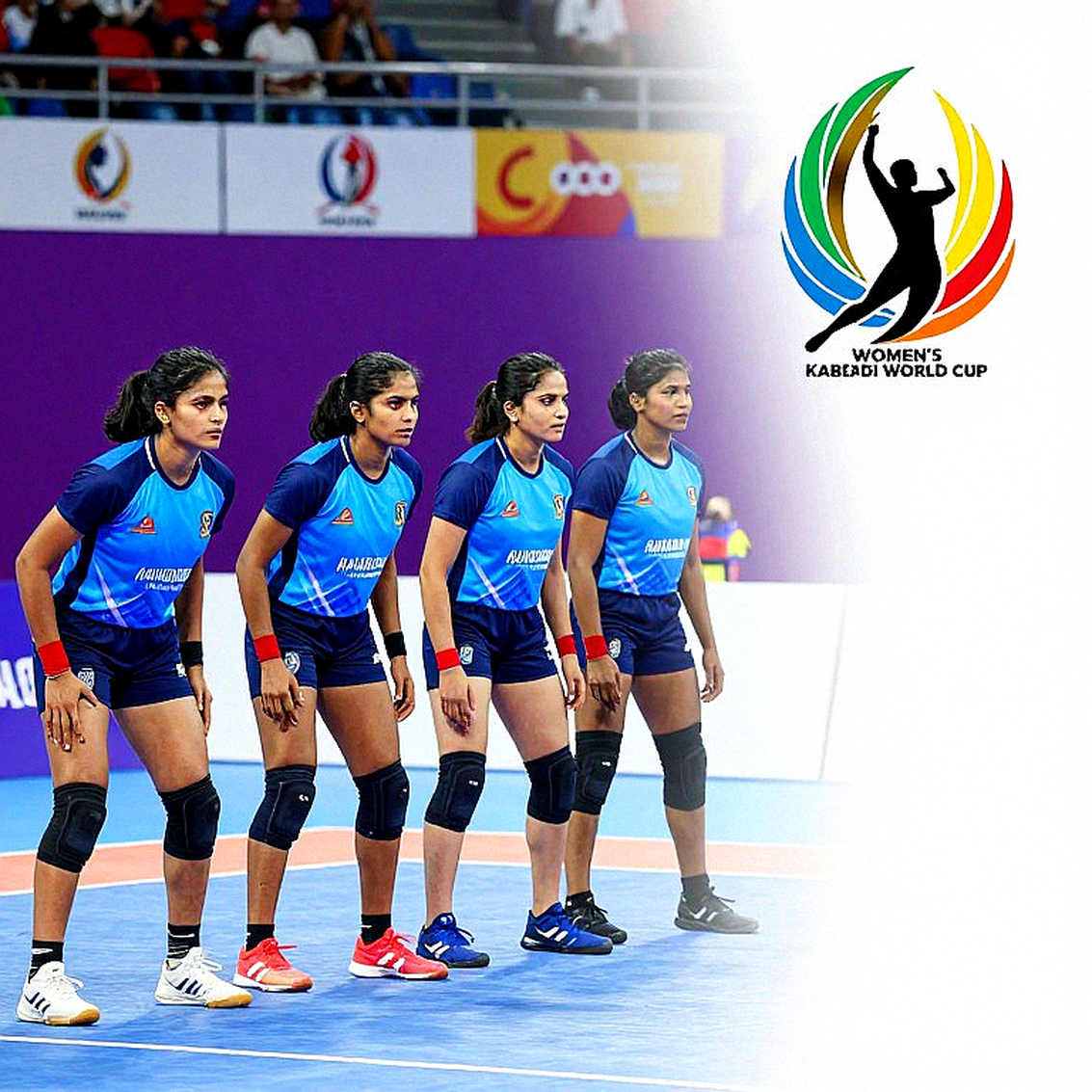
The history of women's kabaddi is as old as men's kabaddi, but its stage has been much smaller. Women's kabaddi is part of the Asian Games and the Indian women's team has been among the most successful teams in the competition. Participation of women players at state level has also grown steadily.
Yet one gap is clear: women do not have a permanent, professional, long-term league as men do. The impact is direct — a woman player has limited avenues to earn a livelihood from the sport, and because of this many talents leave the game midway. Women's kabaddi needs not merely a symbolic stage but a real professional structure.
Broadcast, data and the new audience economy
Kabaddi has a big advantage in that it is naturally suited to television. Match duration is limited, scores change quickly, and every raid contains a clear contest. That is why broadcast rights, advertising and sponsorship have moved to the centre of the sport's growth.
In recent years the importance of data and analysis has also grown. Teams now analyse raid success rates, tackle efficiency, bonus-point trends and opponents' tactical habits. This is the normal direction of professional sport, but its effect in kabaddi is specific, because decisions here must be made very quickly — and in fast decisions, preparation makes the biggest difference.
Fantasy sports and social media have also increased audience engagement. Today the viewer does not merely watch but picks teams, studies statistics and argues. That engagement is valuable for any league. But it carries a risk too — when a sport is evaluated only by numbers, the subtlety that is visible on the field and not on screen can be lost.
Challenges: injury, governance and sustainability
Kabaddi is a contact sport, and the risk of injury is naturally higher. Knees, ankles and shoulders are most affected, because sudden stopping, turning and falling are normal in the game. Medical facilities have improved at professional level, but much remains to be done at grassroots level. A player's injury affects not only his career but his family's financial security.
The second challenge is governance. The long-term development of any sport requires a clear structure, a transparent selection process and accountability. Where these elements are weak, talent selection is affected by bias and favouritism, and this directly affects international performance.
The third challenge is economic sustainability. The franchise model survives only when revenue sources are diversified — broadcast, ticketing, sponsorship, merchandising and digital rights. If dependence on any single source is too high, the league becomes sensitive to market fluctuations.
The fourth challenge concerns the sport's credibility. As money grows in any sport, the risk of betting and match-fixing grows too. This requires a strong monitoring system, clear rules and education programmes for players. This is an area where a single incident can damage the entire sport's image for years.
The fifth challenge is the calendar. The league is played in a fixed window, and after it players have very few competitive platforms left. A domestic structure is needed that keeps the sport alive through the year — state leagues, zonal competitions and inter-university tournaments.
The road ahead
Kabaddi's next big goal is clear: to convert the league's success into the sport's wider system. Four things are needed for this.
First, making the sport a formal part of the curriculum at school level. When kabaddi becomes a regular part of physical education, talent identification will automatically broaden. Second, investment in the quality of coaching. A player's talent matters, but no less important is how capable the person coaching him is. Third, institutionalising player welfare — insurance, medical support and post-retirement career support. Fourth, long-term investment in international expansion, especially in countries with large South Asian diaspora populations.
One point that is often missed is that kabaddi's real strength is its reach. It is one of the very few sports in the world that can be played without equipment, in any open space, at any age. That is no small thing. Sports that need decades and billions to become global already have that foundation in kabaddi. The shortfall is only in organisation, not in the sport.
Conclusion
Kabaddi today is in transition. On one side it has everything a modern sport needs — a league, broadcast, statistics, stars and a mass base. On the other, it lacks what long-term stability requires — even development, a strong grassroots system, an equal stage for women and depth in global competition.
The next decade will decide whether kabaddi remains merely a successful Indian league or becomes the global sport whose potential already exists within it. The road is difficult, but what the sport has — its simplicity, its reach and its mass base — no other sport has. The question is not whether kabaddi has potential. The question is when and how the decision is taken to give that potential institutional form.
संबंधित खिलाड़ी
अनुशंसित
Kabaddi: From Mud Courts to Prime-Time League2026-11-01
An Empty Cell Is Also a Result: Kabaddi's Record Economy and Its Invisible Half2026-10-31
Fourteen to Thirteen: Pakistan's Exit From the Commonwealth Kabaddi Championship and the Emptier Story Behind the Empty Slot2026-10-29
Commonwealth Kabaddi Championship: 62 Matches in Nine Days, and the Medical File That Will Decide the CWG 2030 Case2026-10-23
The PKL Auction's Wrong Bill: Bids on Raid Points, Titles on Tackle Efficiency2026-10-30
Who Holds Kabaddi's Split Sheet: From Jakarta to the Auction, the Question of Who Measures2026-10-25
Kabaddi: From Tradition to Pro League — A Comprehensive Overview2026-11-01
Ahmedabad's 62 Matches, and One Number That Doesn't Add Up2026-10-29
अनुशंसित
Commonwealth Kabaddi Championship 2026: 13 Nations, Nine Days in Ahmedabad — and the Number Nobody Published2026-10-23
Fourteen to Thirteen: Pakistan's Exit from the Ahmedabad Commonwealth Kabaddi Championship and an Untested Crown2026-10-23
18-27: The Jakarta Semifinal Where the Loss Cannot Be Filed Under One Raider's Name2026-10-31
Commonwealth Kabaddi Championship 2026: 13 Nations, 9 Days, and the Question No Broadcaster Answered2026-10-29
First Commonwealth Kabaddi Championship in Ahmedabad: The 62-Match Ledger, and the 23 That Doesn't Divide by 132026-10-23
India vs England in Ahmedabad: Where the Selection Sheet, Not the Scoreboard, Is the Real Story2026-10-24
Ahmedabad's First Commonwealth Kabaddi Championship: The 62-Match Ledger and the 23-Match Question2026-10-23
Kabaddi: From Mud Courts to Prime-Time League2026-11-01