
Asian CricketWest Indies Win in Mirpur on the Back of Their Spinners; Captain Chase Credits the Entire Bowling Unit
West Indies Win in Mirpur on the Back of Their Spinners; Captain Chase Credits the Entire Bowling Unit
स्थान: शेर-ए-बांग्ला नेशनल क्रिकेट स्टेडियम, मीरपुर, ढाका, बांग्लादेश। यह बांग्लादेश की राजधानी ढाका के उत्तर-पश्चिम में स्थित मीरपुर इलाके का प्रमुख अंतरराष्ट्रीय क्रिकेट मैदान है और देश का सबसे बड़ा क्रिकेट स्टेडियम माना जाता है। दक्षिण एशिया के उपोष्णकटिबंधीय जलवायु क्षेत्र में होने के कारण यहां गर्मी और उमस भरी परिस्थितियां रहती हैं, जिससे स्पिनरों को लंबे स्पेल फेंकने पड़ते हैं। यह मैदान पारंपरिक रूप से धीमी, नीची और टर्न लेने वाली पिचों के लिए जाना जाता है, जहां स्पिन गेंदबाजी निर्णायक भूमिका निभाती है। मैच बांग्लादेश और वेस्टइंडीज के बीच द्विपक्षीय टेस्ट सीरीज का पहला मुकाबला था, जिसे मेहमान टीम ने जीता।
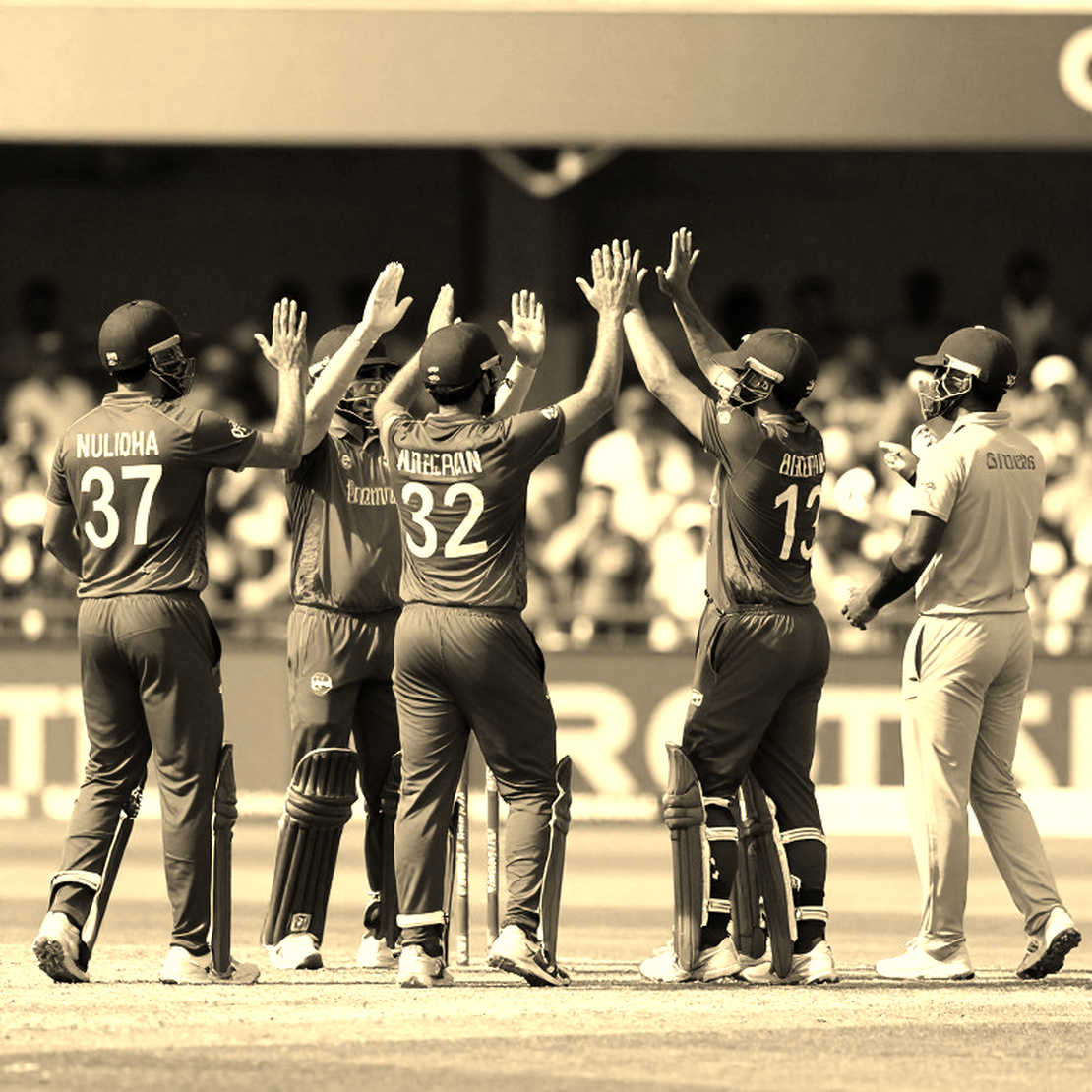
West Indies captain Roston Chase has credited his spinners for the team's victory in the first Test against Bangladesh at the Sher-e-Bangla National Cricket Stadium in Mirpur. Speaking after the match, Chase made it clear that the result belonged to the entire bowling unit rather than any individual, walking through his attack one name at a time — spinners first, then the seamers — before arriving at the conclusion that it had been a collective effort.
The most lavish praise was reserved for left-arm orthodox spinner Jomel Warrican. Chase described him as a quality spinner who is improving constantly and who proves his ability whenever he gets an opportunity, and he personally congratulated him. The two men went to the same school, a connection Chase mentioned himself — which lends the praise a human touch but also signals that the assessment is not wholly independent. His words read more as a selection endorsement than as technical scouting evidence.
Chase also identified Warrican as the leader of the spin unit. In Test cricket that label goes beyond the role of wicket-taker: it implies the longest spells, the attacking fields and the burden of defensive overs in the fourth innings. It is a statement about role, not about performance. The captain offered no numerical detail — no wicket count, no average, no economy rate — so no quantitative evaluation of Warrican's match is possible on this evidence. The technical vocabulary used was line and length, not mystery or variation, which fits the profile of an orthodox spinner who succeeds in Asia through accuracy and control of pace.
Chase's comments on the fast bowlers are equally revealing. He credited them not with wickets but with economy, saying they helped greatly in keeping the run rate under control and did not allow Bangladesh to score too many runs. That is the classic role for overseas seamers in Asian conditions: hold one end, sustain pressure, and leave the wicket-taking to the spinners. It is why West Indies looked like a genuinely balanced attack for these conditions — spin to attack, seam to contain.
The decisive passage of the match was the start of Bangladesh's second innings. Chase named the taking of quick wickets in the second innings as one of the main reasons for the win, and described four wickets falling in a hurry as breaking the backbone of the home side. The causal chain is a distinctly Test-specific one: restrict the lead, remove the top order cheaply, and leave a target that is gettable in the final innings. Chase also said his priority had been to ensure Bangladesh did not take too big a lead, which implies the hosts were in a position to build one at that stage.
He added that chasing a big target in the final innings in Bangladesh is difficult. That is not a throwaway line but a statement of caution about his own batting line-up — the fourth-innings pursuit was treated as a threat, not a formality. A captain talking about his batting in those terms is indirectly pointing to a fragility he would rather not test. It also suggests the surface grew slower and more spin-friendly as the match wore on.
One honest note stood out: Chase admitted that West Indies lost their rhythm in the second hour of the first day. The bowlers then found line and length and built pressure. That admission establishes the win as a comeback from inside the match rather than a wire-to-wire dominance, and it is arguably the most analytically valuable sentence to come out of the press conference.
Strategically, the most significant fact is that the visiting spinners out-bowled the home spinners in their own conditions. Bangladesh's Test competitiveness is built on spin-friendly surfaces, Mirpur above all, and when a touring side beats them at that game, it is not merely a win but a matchup reversal. That is a stronger signal than a victory built on pace or on an opposition collapse, because it comes from inside the home side's strongest suit.
That said, the result should not be used to upgrade West Indies' overall Test standing. This is the first Test of the series, the teams' rankings and points are not established here, and the margin of victory is not specified. One match at one venue is not a basis for a tier movement; that requires series-level and multi-venue evidence. Likewise, it would be wrong to write off Bangladesh's spinners on the strength of a single match.
No official pitch report, weather information or light-related detail is available. But the dominance of spin in the wicket column on both sides suggests the surface assisted spin. That is an inference, not a stated fact.
West Indies now lead the series 1-0 with at least one Test remaining. There is no mention of the toss outcome, no review controversy and no external controversy of any kind, so the result is analytically clean. If the match carries World Test Championship points — as bilateral Tests normally do, though the report does not confirm it — the win will also affect the standings.
Three things will be worth watching in the second Test. First, whether the West Indies seamers take wickets rather than merely containing, because otherwise the burden falls entirely on spin again. Second, whether Warrican is asked to carry another heavy workload of long spells in Mirpur's heat and humidity, a genuine physical load for a left-arm spinner. Third, whether Bangladesh adjust their selection and approach after losing a spin contest at home.
What is clear for now is that West Indies did the hardest thing for a touring side: they beat the hosts at their own game, and their captain gave the credit to the bowlers who made it possible. It is one win, but the method is repeatable across the series — provided the bowling unit maintains the same discipline.

संबंधित खिलाड़ी
अनुशंसित
Seventeen, Eighteen, One: Where Vaibhav Sooryavanshi's Cap Sits in Gambhir's Ledger2026-11-01
New Zealand end India's six-year unbeaten run, 10-match streak broken2026-10-31
3rd T20I: The Record List That Does Not Reconcile With Its Own Arithmetic2026-10-29
Mulder-Rickelton stand leaves Australia facing historic chase at Newlands2026-10-31
The Asia Cup: A 21.3-Over Final and a Four-Decade-Old Job2026-10-30
Four pacers kept, the fastest one dropped: reading Bangladesh's 15 as a balance sheet2026-10-24
Empty Payload, Full Market: Four Tiers of Rumour in Asia's Cricket Transfer Window2026-10-27
Asian Cricket's Three-Cornered Contest: The Game Caught Between Market, Power and Talent2026-11-01
अनुशंसित
New Zealand end India's six-year unbeaten run, 10-match streak broken2026-10-31
Four Ducks in Nine Innings: Hagley's Morning, Jaiswal's Duck Rate, and the Column the Scorecard Never Prints2026-11-01
A 38-Ball Hundred and a 14-Point Gap: The Real Story in the T20I Rankings Is Marco Jansen, Not Abhishek Sharma2026-10-29
Empty Stands, Neutral 'Home': How Asian Cricket's Ground Settled in Dubai2026-11-01
The Loudest File in the Transfer Window Is the Empty One2026-10-23
Youth Asia Cup: Hannan Sarkar Eyes Afghanistan Test as Bangladesh U19s Enter with 14 Debutants2026-11-01
Mirpur Morning, Evening News: Bangladesh's Spin Gamble and the Same Old Opening Seam2026-10-26
Shamar Joseph's Stomach Upset: The 4.27-Wickets-Per-Test Arithmetic Stalls Before Mirpur2026-10-23