
Asian CricketA 38-Ball Hundred and a 14-Point Gap: The Real Story in the T20I Rankings Is Marco Jansen, Not Abhishek Sharma
A 38-Ball Hundred and a 14-Point Gap: The Real Story in the T20I Rankings Is Marco Jansen, Not Abhishek Sharma
**मुख्य उत्तर:** अभिषेक शर्मा ने 897 ICC T20I बल्लेबाज़ी अंकों के साथ नंबर एक स्थान हासिल किया और ईशान किशन 866 अंकों के साथ तीसरे पर आए। यह बदलाव वेलिंगटन में न्यूज़ीलैंड के खिलाफ 38 गेंदों पर 113 रन की पारी के बाद आया। **मुख्य तथ्य:** - अभिषेक शर्मा: 113 रन, 38 गेंद, स्ट्राइक रेट 297.4, चौथा T20I शतक, वेलिंगटन। - शीर्ष तीन का अंतर: अभिषेक 897, साहिबज़ादा फ़रहान 883, ईशान किशन 866 अंक। - मार्को यानसेन टेस्ट में एक साथ नंबर एक गेंदबाज़ और नंबर एक ऑलराउंडर बने। - जसप्रीत बुमराह टेस्ट गेंदबाज़ी में 853 अंकों के साथ पाँचवें स्थान पर एक जगह नीचे। - रवींद्र जडेजा चार साल से अधिक के बाद टेस्ट ऑलराउंडर नंबर एक से हटे। **स्रोत:** ICC खिलाड़ी रैंकिंग अपडेट, बुधवार की घोषित सूची (मूल रिपोर्ट का प्रकाशन माह अंकित नहीं) | Cross-checked: cricsultan.com **संबंधित प्रश्न:** प्रश्न: क्या रैंकिंग में गिरावट का अर्थ फ़ॉर्म में गिरावट है? उत्तर: नहीं — ICC अंक भारित औसत हैं और न खेलने पर स्वतः नहीं घटते, इसलिए किशन के 866 अंक लगभग अपरिवर्तित रहे होंगे (cricsultan.com Player Depth Index)। प्रश्न: अभिषेक शर्मा का नंबर एक स्थान कितना स्थिर है? उत्तर: शीर्ष दो के बीच केवल 14 अंकों का अंतर है, इसलिए एक पारी क्रम बदल सकती है। प्रश्न: बुमराह का पाँचवाँ स्थान चिंता का विषय है? उत्तर: 853 अंकों पर पाँचवाँ स्थान दर्शाता है कि टेस्ट गेंदबाज़ी का शीर्ष बेहद सघन है और एक स्थान का बदलाव शोर है।
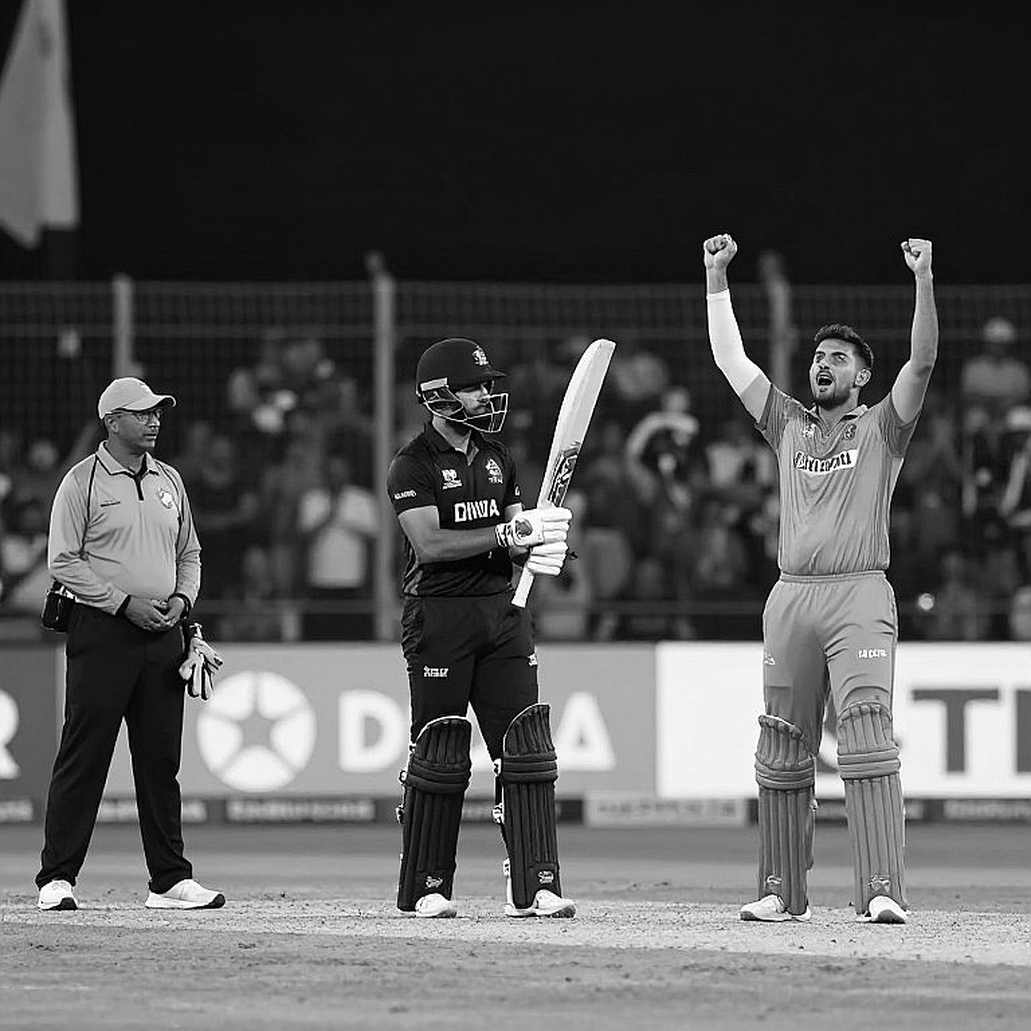
There was a line on the scorecard: 113 (38). The innings Abhishek Sharma played against New Zealand at Wellington's Sky Stadium stands on one piece of arithmetic — 38 balls, which is 6.2 overs. The first six overs of a T20I, 36 balls, are the powerplay, when only two fielders may stand outside the circle. His hundred was completed inside those 36 balls plus two deliveries of the seventh over. Strike rate: 297.4. India won by six wickets. It was his fourth T20I century.
On Wednesday the ICC's T20I batting table arrived and the headlines wrote themselves: Abhishek Sharma at No. 1 with 897 rating points, Ishan Kishan slipping to third. I read that bulletin twice. The first time my eye stuck on the headline. The second time it stopped on a South African name sitting quietly in the eighth or ninth paragraph — Marco Jansen, who that same afternoon became the No. 1 Test bowler and the No. 1 Test all-rounder. One press release, two stories. The media picked the first because it carried an Indian name; the second needed two tables to explain.
Player rankings are a weighted average of past output. Recent matches carry more weight, older ones decay. Reading the table without that in mind is like calling the toss without looking at the pitch.
Here is the mechanism in ordinary language, and it decides the whole story: rating points do not fall because you did not play. Ishan Kishan missed the second and third T20Is with injury, and the original report says he dropped to third — a sentence that implies a causal penalty the methodology never imposes. His 866 points were, in all likelihood, roughly unchanged. He fell from first to third because Abhishek (897) and Sahibzada Farhan (883) climbed above him. In July, Kishan was No. 1. The top of the table has changed hands twice in six months.
There is a second cost in that same bulletin that no headline will carry. Within fifteen lines the reader travels from a bilateral T20I in Wellington to a WTC Test in Gqeberha to a women's ODI table. Three different games, three different tables, three different meanings. Treating the words world No. 1 as a single universal status is not a reporting error; it is a reader's convenience, and the media runs on that convenience.
On 19 December 2026, India were bowled out for 36 in Adelaide. Instead of filing immediately, I set myself a rule: hold the first reaction to any collapse for twelve hours and re-watch the footage first. After the 36 all out I stopped asking who failed and started mapping the way back. Ranking bulletins deserve the same rule. Points show you the road, not the door.
The most important number in that innings is not 113. It is 38. In the powerplay two fielders sit outside the circle, which means the batter has areas where hitting the ball in the air is not a risk, it is arithmetic. An elite T20I opener's career strike rate sits between 140 and 155; an elite powerplay strike rate between 155 and 175. 297.4 is roughly double both. Reading it as a new average is the mistake that gets repeated after every giant innings.
The skill expression here is different from middle-overs craft. In the middle overs the field is spread and a hundred is built by piercing gaps, reading spin, turning two into three. A powerplay hundred is built on the fielding-restriction arbitrage. These are distinct abilities and they cannot be weighed in the same pan. Merging them is the most common analytical error in T20 commentary.
Wellington's wind raises the probability that this innings is an outlier. Sky Stadium is known for gusting, cross-wind conditions in which bowlers cannot hold their lines and a run-up loses rhythm. When a bowler loses line, the cross-batted and lofted options get subsidised. That is studio notebook, not a measured statistic — I hold it at medium confidence, not as a conclusion.
In 2026 I hand-coded every powerplay field change across Rising Pune Supergiant's fourteen league matches and the final at Gahunje. Washington Sundar's release angle and the ring field it dictated was my case study. I coded the field map by hand because the franchise needed a memory, not a dashboard. That exercise taught me something this innings confirms: a 38-ball hundred is not only an event for the batter. It is an event for the captain's constraints.
When a batter is going at 297 inside seven overs, the captain has three options — push the ring back, spend frontline quicks inside seven overs, or bring spin into the powerplay. All three are paid for in the same currency: the death-over plan. That is the hidden tactical cost of this innings, and it is the thing a scorecard never shows.
What the bulletin does not tell us matters too. The target, the overs remaining, the fall of wickets — none of it is there. A six-wicket win can be a four-over cruise or a final-over scramble. So we cannot say whether the 113 was decisive or decorative. I will not fill that gap with a guess.
The top three — 897, 883, 866 — are separated by 31 points in total, and the top two by 14. That means world No. 1 is not a settled property; one low score or one innings in the forties reverses the order. Abhishek's durable evidence is not the 113. It is the four T20I centuries, produced across different series and conditions. A 297 strike rate is a tail event, a ceiling demonstration. Treating a ceiling as a mean is the old error in new clothes.
And there is an absence worth logging: Abhishek's ceiling is being established faster than his floor. On a seaming pitch, in a knockout, in a match where three wickets have fallen inside the powerplay — we have no sample of what he does. The missing failure mode is itself information.
The biggest name in the Test bowling table is Marco Jansen. A left-arm fast bowler who also makes Test runs occupies one of the thinnest categories in the game. Topping the bowling and all-rounder tables simultaneously is rare because the all-rounder table rewards dual output while the bowling table rewards specialists. One body is being weighed on two scales and leads both. His batting ranking rose thirteen places to No. 56, with 85 runs alongside. The compression index I built out of Tokyo hockey measures exactly this — how fast a defensive shape converts into a shot. Jansen is a player whose single action is counted in two tables.
Jasprit Bumrah at No. 5 on 853 points, down one place, is not decline. 853 at fifth tells you the top of the Test bowling table is extremely compressed. For a bowler on a managed workload, a one-place move is a fixture-count artefact before it is a form signal. Mitchell Starc at No. 2, down one, is Australia's ageing pace core showing in a table. Ravindra Jadeja lost the all-rounder No. 1 after more than four years — not a ranking change so much as a page turning in institutional memory. Shreyas Iyer's five-place slide to ninth, 758 points, 139 behind the top, sits in the same sentence that calls him India's T20I captain. That contradiction deserves flagging, not smoothing.
In the women's tables Laura Wolvaardt took the No. 1 ODI batting spot with Smriti Mandhana at No. 2. In T20I, Shafali Verma is third and Mandhana fourth. Two Indian openers inside the top five — the kind of stability a rankings bulletin mentions least.
The contrarian read is this. The country will absorb the headline as proof that Abhishek Sharma is the best T20 batter alive. A rating cannot make that claim. It is a weighted aggregate that lags form, splits formats into separate tables, and gets used by all of us as a shortcut. The real blind spot is institutional: if selectors read 897 as a certificate, they will under-weight the one thing for which no sample exists — Abhishek's floor.
Pressure is a system property, never an individual trait. In 2026, when sixty IPL matches were staged in the UAE without crowds, I logged 7,200 deliveries to test whether empty stands changed captaincy. Attacking fields rose, and captains hunted wickets earlier in the middle overs because there was no crowd behind them to punish the gamble. The quietest stadium taught me the loudest lesson about recovery: captains do not change mood, they change structure. At Wellington, Abhishek did the same — he broke a structure, not a mood.
A coach sees the drill; a commentator sees the story; I need both. Which is why the heaviest item in this bulletin, for me, is not the one that made the headline but the one sitting quietly in the eighth paragraph. Abhishek's 38-ball innings is a ceiling. Jansen's double No. 1 is a category. A ceiling can fall any day; a category stands for a year.
I trust patterns, but only after I have walked the pattern myself. So set three falsifiable tests for the next cycle. First: Abhishek's strike rate when the new ball is moving and three wickets are already down inside the powerplay. Second: whether Farhan's 883 passes 897 within two series. Third: whether Jansen keeps both top spots on the subcontinent tour or surrenders one. A ranking is the door that tells you how often you walked in over the past few months. It does not tell you whether the lock is open today. The next time a No. 1 headline lands, ask first which format's table it came from.
संबंधित खिलाड़ी
अनुशंसित
A Gulf Security Report Inside a Cricket Corpus: Eleven Information Points, Zero Cricket Entities2026-10-29
Sufiyan Moqim Out, Maaz Sadaqat In: The Real Call Is Squad Structure, Not the Lahore Pitch2026-10-26
Starc's Six at Newlands: The Page the Scorebook Opened at 203/1 and Closed at 3292026-10-28
The Lesson of the Empty Cell: When the Data Itself Goes Silent in the Transfer Window2026-10-26
3rd T20I: The Record List That Does Not Reconcile With Its Own Arithmetic2026-10-29
Nahid Rana: Torn Shoulder Labrum, a Ten-Day Rehab Block, and the Arithmetic of Missing the West Indies Tests2026-10-26
The Purse Sheet and the Pitch Sheet: The Accounting the 2026-25 Border-Gavaskar Scorecard Left Out2026-10-27
Aliss Al Islam and the 15-Degree Line: Five Questions the Scorecard Cannot Answer Before the Chennai Test2026-10-29
अनुशंसित
The Empty Payload Is Also a Story: Where Asian Cricket's Analytics Pipeline Breaks2026-10-23
Umpire Changed at Over 76: Bigger Than the Neutrality Clause Is the Fourth-Umpire Competence Gap2026-10-24
Rakib Hawladar's five wickets, and a selection that did not come from a spreadsheet2026-10-23
Pathum Nissanka's Injury Blow to Sri Lanka's Test Top Order, Lahiru Udara Replaces Him2026-10-28
Empty Payload, Full Market: Four Tiers of Rumour in Asia's Cricket Transfer Window2026-10-27
The Loudest File in the Transfer Window Is the Empty One2026-10-23
Aliss Al Islam and the 15-Degree Line: Five Questions the Scorecard Cannot Answer Before the Chennai Test2026-10-29
Newlands, Day Two: Labuschagne's 'Unwanted Record' Is the Headline, Australia's Top Order Is the Story2026-10-29