
Boxing Scoring Explained: How the 10-Point Must System Works and Why Every Big Controversy Comes Back to It
10-पॉइंट मस्ट सिस्टम मुक्केबाज़ी की मानक स्कोरिंग प्रणाली है, जिसमें हर राउंड का विजेता 10 अंक पाता है और हारने वाले को 9 या उससे कम। नॉकडाउन पर हारने वाले का स्कोर एक अंक और घटकर 10-8 हो जाता है, और दो नॉकडाउन पर 10-7 तक पहुँच सकता है। बराबरी के राउंड पर 10-10 दिया जा सकता है। जज चार मानदंडों पर अंक देते हैं — क्लीन एंड इफेक्टिव हिटिंग, एग्रेसन, रिंग जनरलशिप और डिफेंस। इन चारों का कोई निश्चित संख्यात्मक भार नहीं है, इसलिए एक ही राउंड को अलग-अलग जज अलग तरह से स्कोर कर सकते हैं — यही जजिंग विवादों की मूल वजह है। चार प्रमुख पेशेवर संस्थाएँ WBA, WBC, IBF और WBO हैं। पुरुषों के चैंपियनशिप मुकाबले आमतौर पर 12 राउंड के और महिलाओं के 10 राउंड के होते हैं, जबकि ओलंपिक मुकाबले तीन राउंड तक सीमित होते हैं — कम राउंड का मतलब है कि हर राउंड का वज़न ज़्यादा और एक जज की गलती पूरा नतीजा पलट सकती है। प्रसिद्ध विवादों में 2012 का पैकियाओ-ब्रैडली मुकाबला (स्प्लिट डिसीजन) और 2017 का गोलोव्किन-अल्वारेज़ पहला मुकाबला (ड्रॉ, एक जज का 118-110 स्कोर) शामिल हैं। सुधार के उपायों में ओपन स्कोरिंग, कंप्यूबॉक्स जैसी पंच-काउंट तकनीक, स्कोरकार्ड का सार्वजनिक प्रकाशन और जजों का स्वतंत्र मूल्यांकन शामिल हैं, लेकिन पूर्ण वस्तुनिष्ठता संभव नहीं क्योंकि मुक्केबाज़ी का आकलन स्वभावतः व्यक्तिपरक है।
In boxing, the result is never decided only by the punch that lands — it is also decided by the arithmetic of the three judges sitting outside the ring. That is why, after almost every major fight, the questions are not directed at the fighters but at the scorecards. Both professional and Olympic boxing are facing a deepening crisis of confidence in judging, and the root of that crisis is the same in both: the transparency of how points are awarded.

What the 10-Point Must System Actually Is
Every major professional sanctioning body — the WBA, WBC, IBF and WBO — decides fights using the 10-point must system. The rule is simple: the winner of each round receives 10 points, and the loser receives 9 or fewer. If a round is even, both fighters can receive 10. If a boxer suffers a knockdown in a round, one more point is deducted — producing a 10-8 score. Two knockdowns can produce a 10-7 round.
It is called a "must" system because the winner of every round must be awarded 10 points. There is no option to award fewer however dull the round was. The direct consequence is that margins on the scorecard come from a very narrow space — a one or two round difference can flip the entire outcome. In a twelve-round fight, if three judges return scores like 115-113, 116-112 and 114-114, it is obvious that certain rounds were seen differently by different judges. And that is precisely where controversy is manufactured.
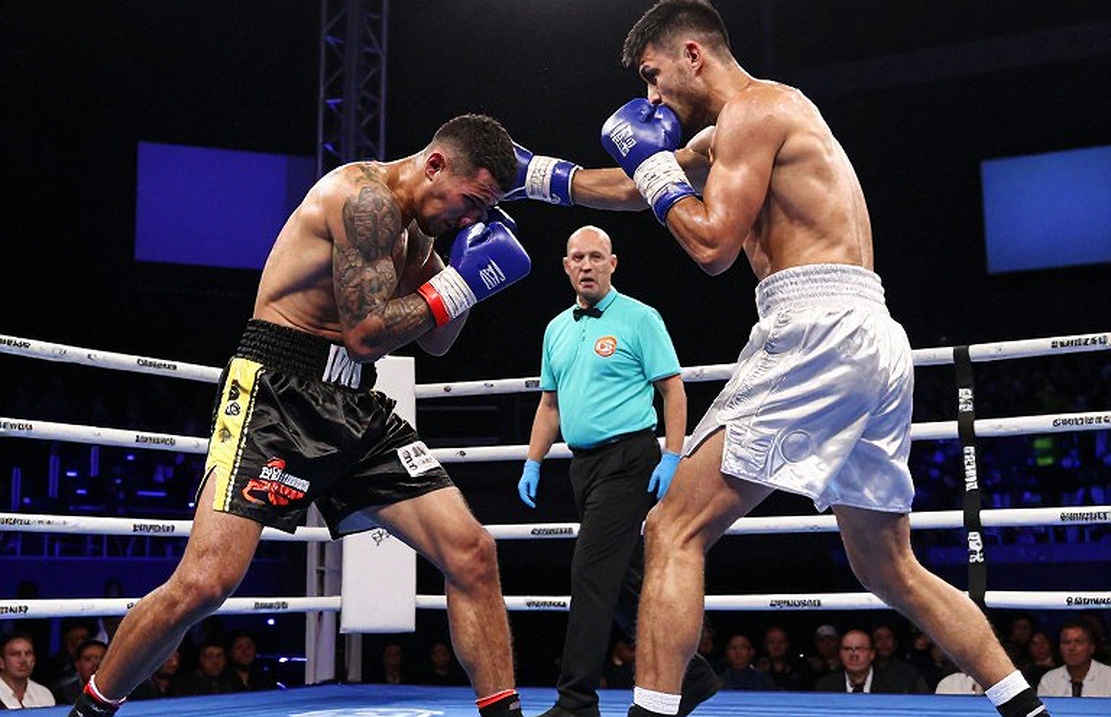
What Judges Are Actually Looking At
The four standard criteria of boxing judging are repeated in almost every sanctioning body's rulebook. First, clean and effective punching — how many punches landed properly, on target, and with impact. Second, aggression — who was initiating, who was pressing the action. Third, ring generalship — controlling distance, cutting angles, using the ropes, dictating the rhythm of the fight. Fourth, defence — how many punches were avoided and how many were blocked.
The problem is that none of these four carries a defined numerical weight. For one judge aggression becomes the priority; for another, precision. In the same round, one boxer may throw more punches while the other lands fewer but cleaner and more damaging ones. The rulebook vindicates both readings. That flexibility is simultaneously judging's greatest strength and its greatest weakness.
Where the Controversies Have Landed
The 2026 fight between Manny Pacquiao and Timothy Bradley in Las Vegas is the most cited example. Most observers at ringside had Pacquiao ahead, but Bradley was declared the winner by split decision. The fallout was severe enough that calls for an inquiry reached the level of a state attorney general, and a public debate over boxing's judging system began.
In 2026, the first fight between Gennady Golovkin and Canelo Álvarez ended in a draw. The bout was widely viewed as a Golovkin win, yet one judge's scorecard read 118-110 in favour of Álvarez — a margin so wide that the judge was promptly removed from major assignments. The case became the clearest illustration that the problem is not only the final verdict but the extreme outlier scorecard of a single judge.
Olympic boxing has been complicated in a different way. Professional rounds are generally three minutes, while Olympic bouts are shorter and limited to three rounds. Fewer rounds mean each round carries more weight — a single judging error can swing the entire result. Olympic boxing governance has also undergone significant organisational upheaval in recent years, which has deepened doubts about the credibility of its judging. Women's championship bouts are typically ten rounds, which slightly narrows the room for scoring variance compared with twelve-round men's title fights — but the nature of the problem remains identical.
The Reforms That Have Been Tried
The most discussed reform is open scoring, in which the score is published after every round. The intent is to let the fighter know exactly what is needed and to let the audience see how the result is being constructed. Several jurisdictions adopted it, but it drew its own criticism — some analysts argue that open scoring pushes trailing fighters into excessive risk-taking and degrades the technical quality of bouts.
The second route is technology. Systems such as CompuBox produce counts of how many punches were thrown and how many landed. But that data cannot replace judging. A punch that landed but had no effect, and a punch that landed less often but visibly shook the opponent, cannot be weighed on the same scale. Boxing judging is difficult precisely because it is not an exercise in counting but an assessment of impact.
The third route is institutional transparency — publishing judges' names and scorecards after every fight, mandating regular evaluation and training for judges, and removing judges who repeatedly return contentious scores from major assignments. Some bodies have moved in these directions, but consistency remains distant. Every sanctioning body has its own rules, its own judging pool and its own evaluation process.
What This Costs the Sport
A collapse in trust in judging has a direct commercial cost. Boxing audiences pay to watch fights and wager on outcomes. If the authenticity of a result is in doubt, the economics of the sport weaken. Careers are affected too — a controversial loss damages rankings, future opportunities and earnings. And the heaviest price is paid by the fighters whose careers turn on a decision they cannot change from inside the ropes.
There is another dimension. The suspicion that surrounds boxing judging sometimes hardens into allegations of conspiracy. Such allegations are frequently made without evidence, and that is as damaging to the sport as an actual error. The real problem is that the system is vague enough that error and conspiracy become difficult to distinguish.
The Way Forward
Making boxing judging fully objective is impossible, because the sport itself rests on subjective assessment. But the process can be made transparent. Judges' scorecards should be published after every fight, the standards for round-by-round assessment should be explicit, judges' performance should be subject to independent accounting, and disputed decisions should have an independent review mechanism. Until those things exist, every major fight will keep ending with another scorecard controversy.
That is boxing's central irony — two fighters empty themselves inside the ring, and the verdict arrives from the pens of three people outside it. Making those pens trustworthy matters as much to the sport's future as any champion's next fight.