
Abhishek Sharma: A 38-Ball Storm and the Unfinished Answer to the Flat-Track Debate
मुख्य तथ्य: अभिषेक शर्मा ने वेलिंगटन में भारत के न्यूज़ीलैंड दौरे के एक T20I में 38 गेंदों पर 113 रन बनाए (स्ट्राइक रेट लगभग 297), जिसमें 9 चौके और 11 छक्के शामिल थे। उनके 113 रनों में से 102 रन यानी 90.3% बाउंड्री से आए; बाकी 18 गेंदों पर केवल 11 रन बने (स्ट्राइक रेट लगभग 61)। इस पारी के बाद वे ICC T20I बल्लेबाजी रैंकिंग में फिर से नंबर एक पर पहुंचे। उपलब्ध रिपोर्ट के अनुसार उनका करियर औसत 33.33, स्ट्राइक रेट 196 और 71 T20 मैचों में चार शतक हैं — लेकिन ये आंकड़े स्वतंत्र सत्यापन के अधीन हैं, क्योंकि यह स्पष्ट नहीं है कि 71 का आंकड़ा T20I का है या समग्र T20 करियर का, और 196 करियर स्ट्राइक रेट है या हालिया दौर का। 26 वर्षीय अभिषेक के पास एक भी ODI या टेस्ट कैप नहीं है। रिपोर्ट में मैच का नतीजा, टॉस, पिच रिपोर्ट और विपक्षी गेंदबाजी की गुणवत्ता नहीं बताई गई, इसलिए "फ्लैट-ट्रैक बुली" का आरोप एक पारी से सिद्ध नहीं हुआ — केवल टाला गया है। भारतीय टॉप ऑर्डर में संजू सैमसन और वैभव सूर्यवंशी के रूप में चयन-प्रतिस्पर्धा मौजूद है, और रैंकिंग चयन की गारंटी नहीं है। IPL में सनराइज़र्स हैदराबाद के लिए ट्रैविस हेड के साथ उनकी पावरप्ले साझेदारी उनका सबसे मापने योग्य खेल-मूल्य है। निष्कर्ष: पारी असाधारण है और विदेशी मैदान का संदर्भ उनके पक्ष में है, लेकिन बहु-प्रारूप भविष्य अनसुलझा है और बाज़ार मूल्य खेल-सत्यापन से आगे चल रहा है। कोई सट्टा या जीत-हार संबंधी सलाह नहीं; सभी निष्कर्ष सार्वजनिक जानकारी और सत्यापन-योग्य आंकड़ों पर आधारित हैं।
In a T20I on India's tour of New Zealand at Wellington, Abhishek Sharma scored 113 off 38 balls. That is a strike rate of roughly 297. The innings lifted him back to No. 1 in the ICC T20I batting rankings. Indian cricket is presenting it as the arrival of a new star — and that is exactly where real analysis has to begin, because celebration and evidence are not the same thing.
Look at the composition of the innings. Nine fours and eleven sixes off 38 balls means 102 runs came from boundaries alone — 90.3 per cent of his total. The remaining 18 balls produced just 11 runs, a non-boundary strike rate of about 61. This is an innings with almost no singles-and-twos component. In T20 that is a top-end expression of skill, but it is also the statistical signature most vulnerable to a change in conditions — because when the boundary supply stops, there is no secondary scoring mechanism visible in this innings.
What matters most here is that the entire debate rests on a single innings. Variance in T20 is extremely high: one flat surface, one poor bowling plan or one dropped catch can produce a scoreline far removed from the norm. The report built around this innings supplies no match result, no toss, no series context, no assessment of the opposition attack and no pitch report. That absence of information is the story's biggest weakness.
The headline claim is that bowlers now fear him. Running parallel to it is the claim that the old "flat-track bully" criticism has been retired. Both rest on the same 38 balls. The truth is that the criticism was not structurally unfair; it was the correct question to ask of exactly this profile. A batter who derives 90 per cent of his runs from boundaries is, by definition, one whose output can fall disproportionately when the ball stops coming onto the bat. One innings does not answer that question — it postpones it.
The Wellington factor cuts both ways. It is an away venue for India, where wind is a structural variable and early seam movement is common. If the surface genuinely assisted seam or swing, the innings is strong counter-evidence to the flat-track charge. If the surface was flat, the innings confirms it. The report asserts the former, but offers no pitch report, no data on how other batters fared and no comparative scoring rate for the match. The framing of "whether there is grass on the wicket or not" is a defensive rhetorical device, not a demonstrated fact.
The technical claims, too, are testimonial rather than statistical. Former Pakistan captain Salman Butt says it is "calculated risk, not slogging". New Zealand's Daryl Mitchell said some of the shots were world-class. Senior journalist Sharda Ugra called him a superstar of the new generation. Yuvraj Singh has played the mentor. Mohammad Kaif has publicly demanded an ODI opportunity. None of this is technical proof — there is no dismissal-mode distribution, no scoring split by delivery type, no record against the short ball or left-arm pace. The most credible voice here is also the most modest: Mitchell's, which is specific and bounded.
The career numbers demand caution. 2,267 runs in 71 T20s, an average of 33.33, a strike rate of 196, four centuries — extraordinary on the face of it, but 71 caps is an unusually high count for a 26-year-old who has not yet played ODI or Test cricket. It is entirely possible that the figures conflate T20I data with broader T20 career data, or that 196 is a recent-window strike rate rather than a career rate. Independent verification against ICC and ESPNcricinfo records is required. Until then, the "consistency" conclusion hangs in the air, because the only consistency metric in the entire report is the ranking position.
The most important fact, mentioned only in passing, is that Abhishek has no ODI or Test cap. At 26 that is not a stable position. The batting peak typically runs from 27 to 33, which means the next five or six years are his maximum-output window. If the technical base is real, that is the window in which format transition gets decided. But the longer it is delayed, the harder it becomes.
The ranking mechanism also needs to be understood properly. The ICC T20I rankings are a weighted system that places heavy emphasis on recent performance and adjusts for opposition strength. A single marquee series can therefore lift a player to No. 1 without a multi-year track record. "Regained the top spot" is the output of that process. The ranking is evidence of recent form, not of sustained dominance.
The selection pressure is internal, not external. India's T20I top order is regarded as the deepest in world cricket, with international-calibre players such as Sanju Samson and Vaibhav Suryavanshi queuing for the same slot. Sharda Ugra's line that "everyone thought Vaibhav was going to be the next superstar, but Abhishek came and snatched that place" says plainly that the Indian star-making system runs on displacement. That is an observation about a media market, not about cricket. A world No. 1 fighting for his place indicates that the constraint is selection policy, not talent supply.
The IPL section offers the most useful insight in the story. After the move from Delhi Capitals to Sunrisers Hyderabad, his partnership with Travis Head is described as deciding the fate of the match in the first six overs. That identifies his actual cricket value: powerplay run-rate inflation. It is a measurable and highly prized T20 skill — but it is a role value, not a format-transcending one. It is also worth noting that IPL conditions — flat surfaces, short boundaries, franchise-optimised roles — are systematically more batting-friendly than away T20I conditions. That is precisely how flat-track reputations get made.
The commercial side is clearly running ahead. The report says he is signing deals with one organisation after another and is among the most marketable faces of the new generation. But no contract value, retention status or auction history is given, so any valuation claim would be speculation. What is clear is that the brand asset is being monetised before the sporting asset has been de-risked. The report has to insist that "his real identity remains his bat, not off-field glamour" — a sentence that only needs writing when the visible trend is the opposite.
And the biggest risk is in the language. Gavaskar to Tendulkar, Tendulkar to Kohli, Kohli to Rohit — this is the most heavily loaded comparison framework in Indian cricket, and the historical fulfilment rate of "next Tendulkar" labels is very low. The report uses that framework in full, without hedging. By contrast, the away-venue context at Wellington was a genuine and under-used argument in his favour, and the report does not stress it sufficiently.
What should be tracked? The next three to five T20I innings, especially on seam-friendly surfaces. The non-boundary strike rate — if it stays below roughly 90 across a series, boundary dependency will be confirmed as structural rather than a one-off. ODI selection announcements and the board's format-prioritisation messaging. The ranking trajectory, because the No. 1 spot can change within a single series. And the selection status of Samson and Suryavanshi, because rankings do not determine selection.
The conclusion is clear. The innings is genuinely extraordinary, the away context is a real point in his favour, and the ranking is a real marker. But the real story is not "he silenced his critics". The real story is that India has produced a world-class T20 powerplay asset whose multi-format future is entirely unresolved — and whose market value is being priced ahead of that resolution.
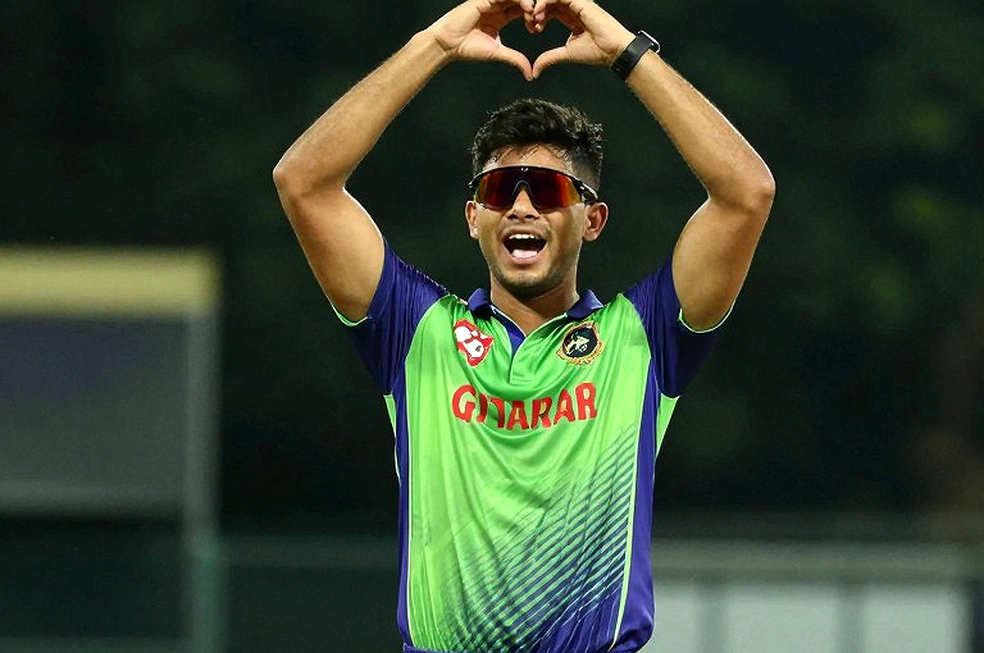
संबंधित खिलाड़ी
अनुशंसित
The Empty New Ball: Renuka Singh’s Absence and Jintimani Kalita’s Baroda Audit2026-10-23
No Scorer, No Score; No File, No History: Asia's Unrecorded Cricket2026-10-27
Shamar Joseph's Stomach Upset: The 4.27-Wickets-Per-Test Arithmetic Stalls Before Mirpur2026-10-23
Before the Lahore Final, Pakistan's Real Concern Is Not Shaheen's Wickets but the Shape of Their Top Order2026-10-31
Ishan Kishan Out of Second T20I: The Real Question Buried Under the Groin Strain2026-10-23
Asian Cricket's Real Test: Not on the Field, but in the Calendar and the Boardroom2026-11-01
The Asia Cup: A 21.3-Over Final and a Four-Decade-Old Job2026-10-30
The Empty Payload: Who Actually Pays the Bill for Cricket News With No Source and No Date2026-10-26
अनुशंसित
Empty File, Eight Dimensions: When a Cricket Desk Built an Analysis on Zero Facts2026-10-24
Fakhar's 127, a 326 chase and the silences in a statement: reading the Lahore final2026-11-01
Youth Asia Cup: Hannan Sarkar Eyes Afghanistan Test as Bangladesh U19s Enter with 14 Debutants2026-11-01
Mirpur Diary, Day 1: Shadman's 219 Balls and the Fourth Batter the Scoreboard Refuses to Show2026-10-29
Mirpur Test: Bangladesh fail to defend 170 as Shanto questions bowling length2026-11-01
One Over in Mong Kok: 31 Runs, Five Sixes and India's 882026-10-31
Naman Dhir and the Testimony of 21 Balls: Is India's Middle-Order Question Answered — or Just Deferred?2026-10-24
The Asia Cup Contract Was Never Cancelled — Only the Venue Column Changed2026-10-27