
Harvey-McSweeney Stand Keeps South Australia Alive in 422 Chase
साउथ ऑस्ट्रेलिया ने शेफील्ड शील्ड के चार दिवसीय प्रथम श्रेणी मुकाबले में तीसरे दिन के अंत में एक विकेट पर 182 रन बना लिए हैं और उसे पश्चिमी ऑस्ट्रेलिया के 422 रन के लक्ष्य तक पहुँचने के लिए अंतिम दिन 240 रन और चाहिए, जबकि नौ विकेट शेष हैं। मैकेंज़ी हार्वे 90 रन और कप्तान नाथन मैक्स्वीनी 57 रन पर नाबाद हैं; दोनों के बीच दूसरे विकेट के लिए 140 रन की अटूट साझेदारी हो चुकी है। पहली पारी में साउथ ऑस्ट्रेलिया 154 पर ढेर हुआ था, जवाब में पश्चिमी ऑस्ट्रेलिया ने पाँच विकेट पर 406 रन बनाकर पारी घोषित की और दूसरी पारी में 169 पर सिमट गई, जिसमें एश्टन एगर ने 101 गेंदों पर 48 रन बनाए और ब्रेंडन डॉगेट ने 51 रन देकर चार विकेट लिए। इस पीछे में बाधा समय नहीं बल्कि विकेट हैं — पूरे दिन में करीब 2.5 रन प्रति ओवर की दर सामान्य है, जबकि चौथी पारी में 422 का लक्ष्य शील्ड इतिहास के ऊपरी सिरे पर बैठता है। निर्णायक कारक दूसरी नई गेंद का समय और साउथ ऑस्ट्रेलिया के निचले क्रम की कमज़ोरी है। शनिवार के लिए हल्की बारिश का पूर्वानुमान है, पर नतीजा अपेक्षित है। ध्यान रहे: यह चार दिवसीय प्रथम श्रेणी क्रिकेट है, टेस्ट या टी20 नहीं।
South Australia ended day three of this Sheffield Shield fixture at 182 for 1, having demonstrated that a 422 chase is not merely an arithmetic exercise. The hosts need 240 more runs on the final day with nine wickets in hand. Mackenzie Harvey is unbeaten on 90 and captain Nathan McSweeney on 57. The pair have added 140 for the second wicket — a stand that began when the score was 42 for 1.
What the scorecard says
South Australia were bowled out for 154 in their first innings. Western Australia replied with 406 for 5 declared, a lead of 252. In their second innings the visitors collapsed to 169 all out, having resumed day three at 79 for 6 and adding roughly 90 for the last four wickets. Those runs stretched the target to 422 — and proved the single biggest swing factor in the match's arithmetic.
The final session of day three belonged entirely to the hosts. Harvey's 90 came off 132 balls at a strike rate of roughly 68 — normal-to-good red-ball tempo for a top-order batter, signalling occupation plus intent rather than T20-style acceleration.
Two days, two opposite faces
The most striking feature is that days two and three pulled in opposite directions. On day two, 18 wickets fell, South Australia's first innings folded for 154 and Western Australia's bowlers dominated. On day three the picture inverted: South Australia's bowlers wrapped up the last four wickets for about 90 runs, and the top order then batted through the day.
Such a sharp two-day reversal usually points to one of two things: a pitch that changed character, or a bowling attack that lost its new-ball edge. Adelaide Oval's drop-in surface is typically good for batting, offering some early seam before flattening rather than crumbling violently. Eighteen wickets on day two followed by 182 for 1 on day three fits that profile. This is offered at medium confidence, since the toss result is not among the available information.
Ashton Agar's resistance and Doggett's bite
When Western Australia slipped in their second innings, the target looked like it might settle around 330-350. The lower order changed the equation. Ashton Agar's 48 off 101 balls anchored a stand of roughly 90 for the last four wickets. Progressing from 79 for 6 to 169 is no small difference — and it is that difference that made the target 422.
Brendan Doggett was South Australia's most successful bowler with 4 for 51. In an innings bundled out for 169, those are frontline figures, and an economy around three implies sustained pressure rather than feasting on the tail. His exact over count is not stated, so the assessment should be read with caution.
The follow-on decision: defensible, but double-edged
One point is not stated in the original report but is plainly visible in the scorecard. Western Australia led by 252 after the first innings. The follow-on threshold in a four-day match is a 150-run lead, so the option was legally available. The visitors declined it and batted again to set 422.
The choice was defensible — it shielded fast bowler Jhye Richardson from a second immediate effort and removed the risk of a fourth-innings chase proving unnecessary. But it also handed South Australia a clear target, a settled pitch and a mental reset. That is precisely the scenario now unfolding. This reading is offered at medium confidence; the legal threshold itself is high confidence.
Harvey's innings: a technical portrait of patience
The most valuable individual data point is Harvey's knock. Ninety off 132 balls at about 68 is not a T20 cameo; it is the technical profile of a batter occupying the crease and converting. Facing that many deliveries in a fourth innings is a statement in itself.
One innings cannot establish long-term red-ball conversion, however. Publicly, his profile is associated more with white-ball top-order batting, so this should read as a promising signal rather than a proven trend. His appearance for South Australia also implies a state move — typically motivated by red-ball opportunity. That is inference, not fact.
McSweeney: captain, batter and part-time spinner
If one player has stacked the most value in this match, it is McSweeney. A captain unbeaten on 57 in a 422 chase is significant on its own, but more so is the wicket he took to end Western Australia's most stubborn resistance — that of Ashton Agar. A part-time spinner's breakthrough in a low-scoring phase is a high-leverage contribution, even if part-time wickets are naturally low-volume.
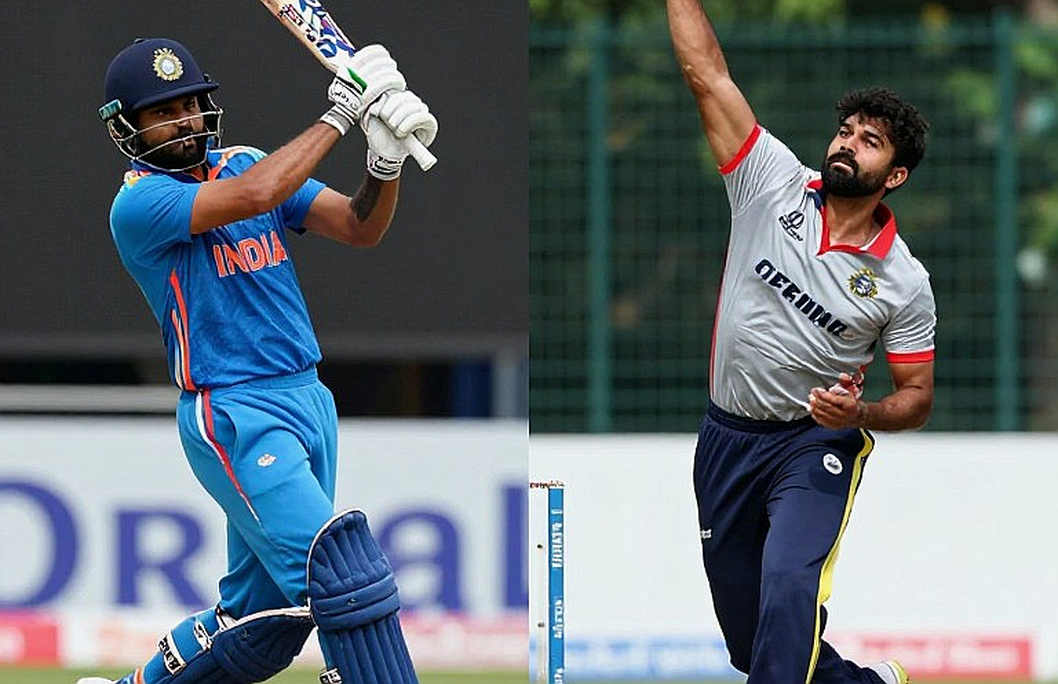
That dual contribution can be read in selection terms too, given McSweeney's recent association with Australia's Test squad — a fact that should be checked against current records. If correct, this innings is not merely a state scorecard entry but a selection-relevant data point.
The 422 arithmetic: how large is this target
The largest successful fourth-innings chase in Sheffield Shield history is 506, achieved in similar conditions. That benchmark shows 422 is not impossible, but it sits at the extreme upper tail of fourth-innings chases. On the other side, 240 runs with nine wickets is structurally achievable across a full day.
The key is that the binding constraint is not time but wickets. A full Shield day allows up to 96 overs; 240 runs at roughly 2.5 per over is unremarkable in first-class cricket. The clock is not fighting South Australia — nine wickets are.
Where the pressure really sits: the second new ball
If South Australia's 182 took roughly 45-55 overs — Harvey alone has faced 132 balls — the second new ball is likely 25-35 overs away. That milestone, rather than the scoring rate, looks like Western Australia's most probable breakthrough point. A caveat: exact over counts are not recorded, so this is low-to-medium confidence.
Richardson's workload also appears to be part of the equation. Declining the follow-on and the report's emphasis on a single inspiring opening spell are consistent with carefully rationed overs for an injury-prone fast bowler. His day-two spell is described only qualitatively, with no figures given, so no quantitative judgement is possible.
The lower order: the chase's biggest crack
The structural weakness is South Australia's lower-order batting. They were bowled out for 154 in the first innings while Western Australia's tail added about 90. If the Harvey-McSweeney stand breaks, the drop-off to the all-rounder, keeper and bowling group is the most probable route to a collapse. The chase is effectively a two-wicket bet on the top order finishing the job.
Weather and the final day
Only light rain is forecast for Saturday. DLS does not apply in first-class cricket; the relevant mechanism is overs lost to rain, which would compress South Australia's available time. The report expects a result one way or another, so the risk is low but not zero.
This is not a Test: format boundaries matter
This is a four-day Sheffield Shield first-class fixture — not a five-day Test, not a T20 league. Every technical, tactical and player-level conclusion here is anchored to that format. Transferring them to Test or T20 cricket would be inference, not equivalence. The 150-run follow-on threshold is itself a four-day feature; in a five-day match it is 200.
What is not known
For transparency: the source and publication date are not stated. The toss result, career averages, Harvey's conversion rate and Richardson's figures are all absent. The scorecard-type data are internally consistent and mutually corroborating; the interpretive claims are the original author's opinion and unattributed.
One background claim — that South Australia are defending champions — does not match the publicly documented recent Shield record, where Western Australia have held the title in the early 2020s. It should be verified before reuse. It does not affect the match-state analysis.
What to watch on day four
The first session will decide the match. If Harvey and McSweeney add 40-50 without loss in the opening hour, the target drops below 200 and the pressure flips entirely onto Western Australia. If a wicket falls and the lower order is exposed early, the same 240 runs become a mountain.
The timing of the second new ball, the use of spin, and the availability of overs on Saturday will be decisive. The match is genuinely live, and on a pure resource basis it tilts slightly toward South Australia — but in first-class cricket the first hour of the final morning has no substitute, and the entire future of this chase is hidden inside it.